
How Content Marketing Drives ROI for US Businesses (2026 Expert Guide)
Content marketing drives ROI for US businesses by attracting qualified prospects, building trust, improving search visibility, and generating leads without relying solely on paid advertising. Unlike traditional marketing campaigns that stop producing results once the budget runs out, high-quality content continues to attract potential customers through search engines, AI-powered search experiences, and digital channels over time.
For small business owners in the United States, content marketing serves as a long-term growth strategy that increases brand awareness, strengthens customer relationships, and supports every stage of the buyer journey. When combined with SEO, audience research, and performance tracking, content marketing becomes one of the most cost-effective ways to generate sustainable revenue and measurable business growth.
How Content Marketing Works in 2026?
As we know content marketing is a good strategic marketing approach focused on creating, publishing, and distributing valuable, relevant, and consistent content to attract and engage a specific audience.
Instead of directly promoting products or services, businesses provide useful information that helps potential customers solve problems, answer questions, or make informed decisions.
Common forms of content marketing include:
- Blog articles
- Case studies
- Videos
- Email newsletters
- Landing pages
- White papers
- Social media content
- Industry reports
- Customer success stories
For US businesses, content marketing serves as a bridge between customer needs and business solutions, creating opportunities to generate leads and increase conversions.
Why ROI Matters for US Businesses
Return on Investment (ROI) measures the profitability of marketing efforts compared to the costs invested.
The basic formula is:
ROI Formula
ROI = (Revenue Generated – Marketing Cost) ÷ Marketing Cost × 100
Small businesses often operate with limited marketing budgets. Every dollar spent must contribute to business objectives such as:
- Lead generation
- Revenue growth
- Customer acquisition
- Brand awareness
- Customer retention
As digital advertising costs continue to rise across industries, many business owners are seeking marketing channels that deliver long-term value. Content marketing addresses this challenge by producing assets that continue generating traffic, leads, and sales months or even years after publication.
How Content Marketing Drives ROI
1. Increases Organic Search Traffic
One of the biggest benefits of content marketing is its ability to improve organic search visibility. When businesses publish content optimized around customer questions, search intent, and relevant keywords, search engines are more likely to rank those pages for valuable searches.
Benefits of organic traffic include:
- Lower customer acquisition costs
- Consistent website visitors
- Higher brand exposure
- Increased lead opportunities
- Sustainable long-term growth
For example, a local roofing company that publishes educational articles about roof replacement costs, maintenance tips, and storm damage repairs can attract homeowners actively searching for solutions.
Another Example, A local car shipping company that published informational articles about enclosed carrier and open carrier differences, shipping costs, transit tips can attract customers actively searching for solutions.
This targeted traffic often converts better than untargeted advertising because visitors already have purchase intent.
2. Generates High-Quality Leads
Content marketing attracts prospects who are already interested in specific products, services, or solutions.
Instead of interrupting potential customers with advertisements, businesses provide helpful information that naturally guides users through the buying process.
Effective lead-generation content includes:
- Industry guides
- Downloadable resources
- Product comparisons
- Educational blog posts
- Webinars
- Case studies
These content assets help businesses capture leads while establishing credibility and expertise. As a result, sales teams spend less time qualifying prospects and more time closing opportunities.
3. Builds Brand Authority and Trust
Trust is one of the most important factors influencing purchasing decisions. Consumers are more likely to buy from companies they view as knowledgeable, credible, and reliable.
Content marketing helps establish authority by demonstrating expertise through:
- Expert insights
- Industry research
- Data-driven analysis
- Customer success stories
- Problem-solving content
When businesses consistently publish valuable information, they position themselves as trusted resources within their industries.
This increased credibility often leads to:
- Higher conversion rates
- More referrals
- Improved customer loyalty
- Stronger brand reputation
4. Supports the Entire Customer Journey
Customers rarely make purchasing decisions immediately. Most buyers move through multiple stages before becoming customers:
- Awareness
- Consideration
- Decision
Content marketing supports each stage of this journey.
Awareness Stage
Potential customers are identifying problems and seeking information.
- How-to guides
- Educational blog posts
- Industry trends
Consideration Stage
Buyers compare available solutions.
- Product comparisons
- Expert reviews
- Case studies
Decision Stage
Customers evaluate vendors and make final purchasing decisions.
- Testimonials
- Service pages
- Success stories
- Demonstration videos
By addressing each stage of the funnel, businesses create more opportunities to convert visitors into paying customers.
5. Improves Customer Retention
Acquiring new customers is often more expensive than retaining existing ones. Content marketing strengthens customer relationships by providing ongoing value after the initial purchase.
Examples include:
- Educational newsletters
- Product tutorials
- Customer success resources
- Industry updates
- Knowledge base articles
These resources help customers maximize the value of their purchases while encouraging repeat business and long-term loyalty.
Best Content Types That Deliver High ROI
Not all content produces the same results. Some formats consistently generate stronger returns.
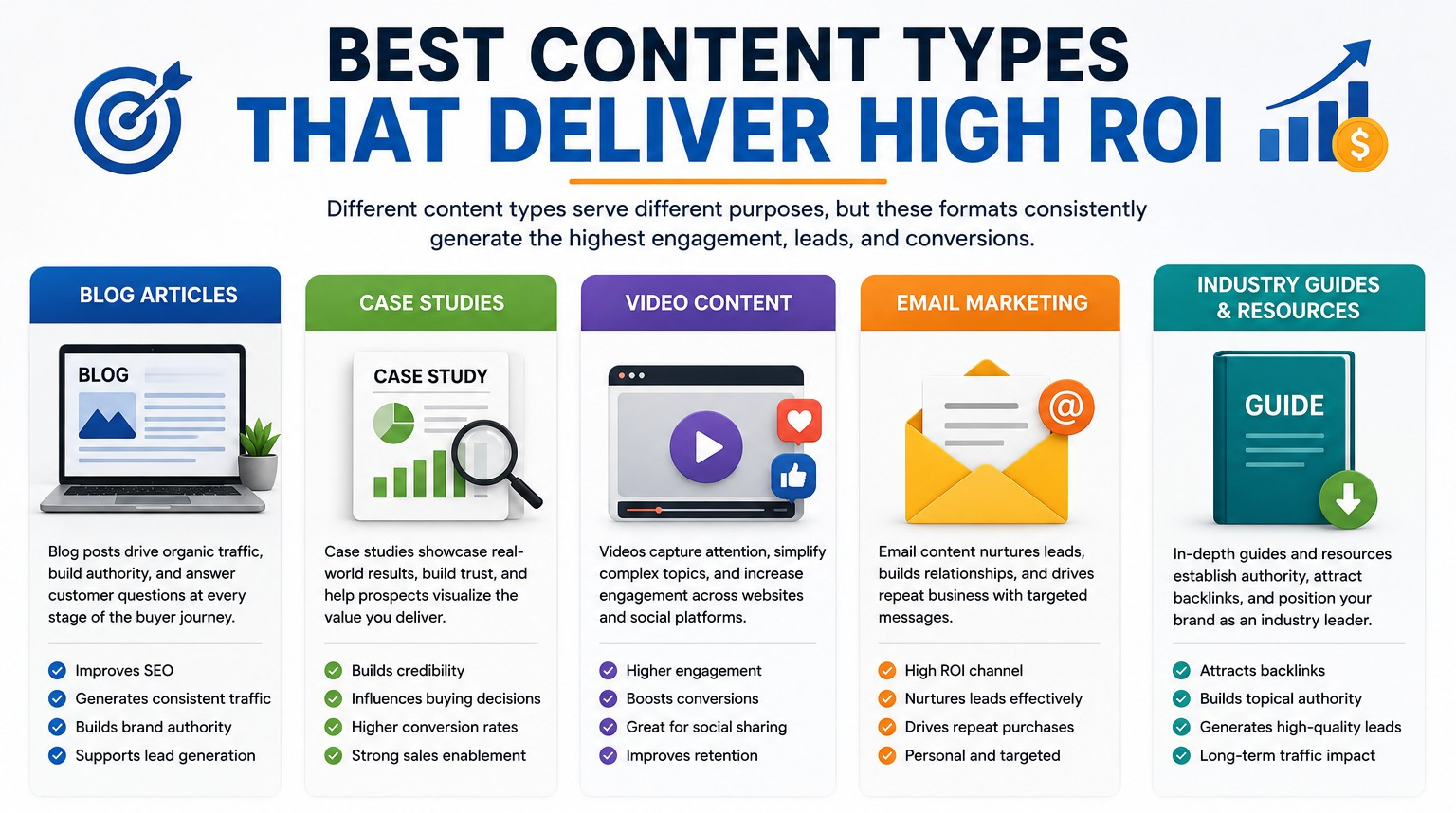
- Blog Articles – Blog content remains one of the most effective tools for SEO, organic traffic growth, lead generation, and brand authority.
- Case Studies – Case studies demonstrate real-world results and build trust with prospective customers. They provide evidence that products or services deliver measurable outcomes.
- Video Content – Video marketing increases engagement, improves retention, and supports both social media and website conversions.
- Email Marketing Content – Email remains one of the highest-performing digital marketing channels. Useful email content helps nurture leads and drive repeat purchases.
- Comprehensive Industry Guides – Long-form educational resources often attract backlinks, improve topical authority, and perform well in both traditional and AI-powered search results.
How to Measure Content Marketing ROI
To understand whether content marketing is generating results, businesses should track key performance indicators (KPIs).
Important Metrics to Monitor
- Organic traffic
- Website engagement
- Conversion rate
- Lead volume
- Customer acquisition cost
- Revenue attribution
- Customer lifetime value
- Email subscriptions
Steps to Measure ROI
- Define Business Objectives – Establish clear goals such as more leads, increased sales, higher traffic, better customer retention.
- Track Performance Data – Use analytics tools to monitor traffic, conversions, and engagement.
- Attribute Revenue – Determine how much revenue is generated from content-driven leads and conversions.
- Calculate ROI – Compare content investment against revenue generated to evaluate performance.
Content Marketing Best Practices for US Small Businesses
To maximize ROI, businesses should follow proven content marketing principles.
- Focus on Search Intent – Create content that directly answers customer questions and solves real problems.
- Publish Consistently – Consistent publishing improves visibility, authority, and audience engagement.
- Prioritize Content Quality – Helpful, accurate, and original content performs better than content created solely for rankings.
- Build Topical Authority – Cover related topics comprehensively to demonstrate expertise within your industry.
- Optimize for AI Search and Traditional Search – Modern content should be structured for Google Search, Google AI Overviews, ChatGPT, Claude, Perplexity, and Gemini. Use clear headings, direct answers, bullet points, semantic keywords, expert insights, and structured information.
Common Content Marketing Mistakes That Reduce ROI
Many businesses fail to achieve desired results because of avoidable mistakes.
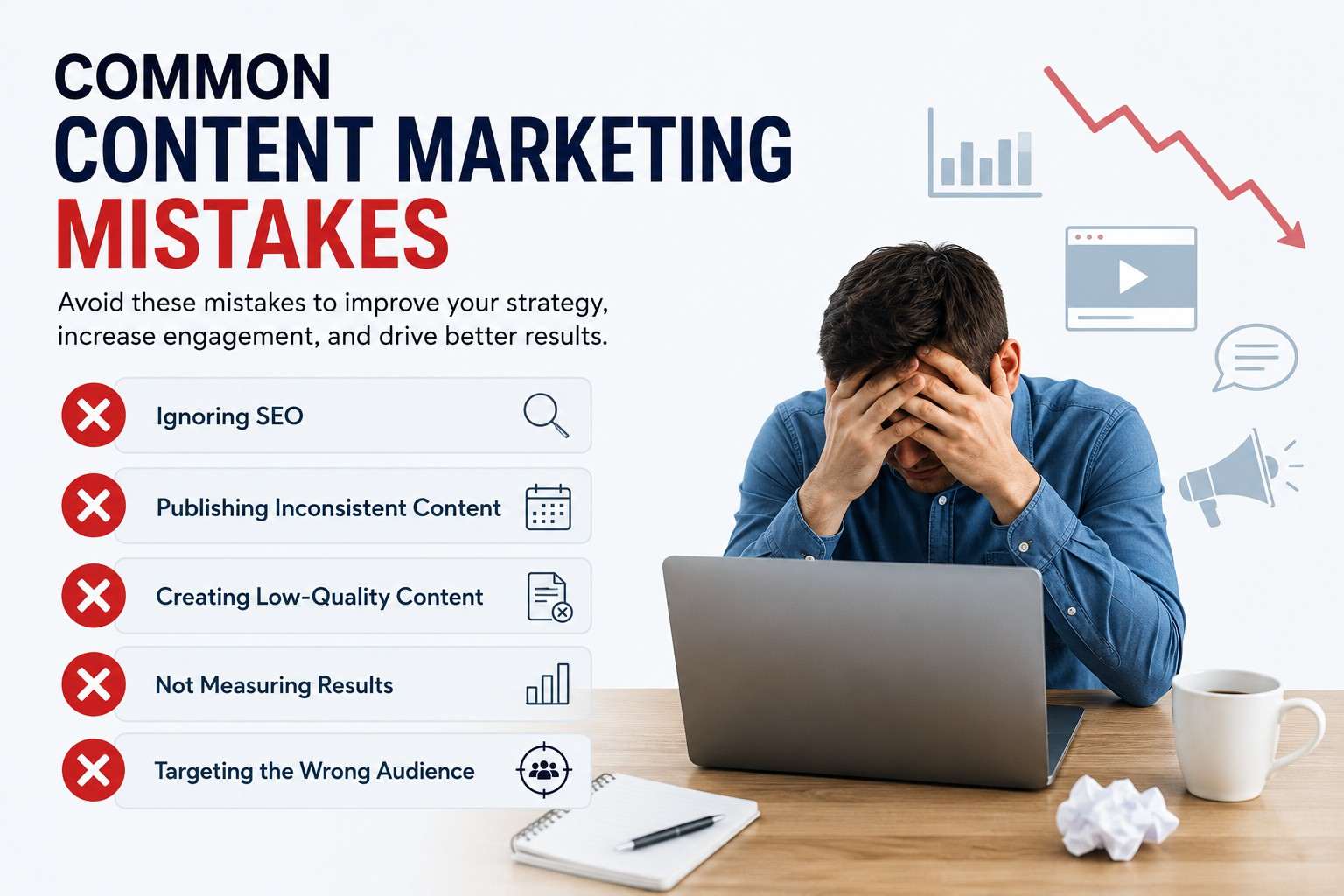
Common issues include:
- Publishing inconsistent content
- Ignoring keyword research
- Creating thin content
- Failing to measure performance
- Neglecting audience needs
- Over-promoting products instead of providing value
Avoiding these mistakes can significantly improve content effectiveness and long-term returns.
The Future of Content Marketing and AI Search
The search landscape is evolving rapidly. AI-powered platforms increasingly prioritize content that demonstrates expertise, authority, trustworthiness, and relevance.
Businesses that want visibility in AI-generated answers should focus on:
- Answer-first content
- Original insights
- Real-world expertise
- Comprehensive topic coverage
- Clear content structure
- User-focused information
Search engines and AI systems are becoming better at understanding context, entities, relationships, and intent. As a result, businesses that create genuinely helpful content will continue to outperform competitors relying on outdated SEO tactics.
Unlike short-term advertising campaigns, quality content continues delivering value long after publication.
Conclusion
Content marketing is one of the most effective ways for US businesses to generate measurable ROI. It increases organic traffic, attracts qualified leads, builds trust, improves customer retention, and supports the entire buyer journey. Unlike short-term advertising campaigns, quality content continues delivering value long after publication.
For small business owners looking to achieve sustainable growth, content marketing is not simply a marketing tactic—it is a long-term business asset. By creating helpful, authoritative, and search-optimized content that aligns with customer needs, businesses can improve visibility across search engines, AI-powered search platforms, and digital channels while driving consistent revenue growth.
Author Bio
Michael Carter is a content strategist and marketing writer with over 10 years of experience creating data-driven content for businesses across the United States. He specializes in content marketing and business growth strategies. Michael helps brands improve online visibility and increase ROI through search-optimized, audience-focused content. His expertise includes content strategy, AI search optimization, organic traffic growth, and conversion-focused marketing. Through practical insights and industry research, he creates valuable resources that help business owners make informed marketing decisions and achieve sustainable growth.